Sports Study Music Kids Site and Search Games Movies Fun Kids

United States Government

Legislative Branch - Congress

Back to US Government for Kids

Back to History for Kids

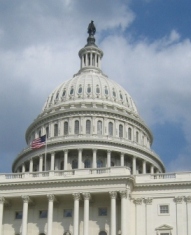
The Legislative Branch is also called the Congress. There are two parts that make up Congress: the House of Representatives and the Senate.

The Legislative Branch is the part of the government that writes up and votes on laws, also called legislation. Other powers of the Congress include declaring war, confirming Presidential appointments for groups like the Supreme Court and the Cabinet, and investigating power.

House of Representatives

There are 435 total Representatives in the House. Each state has a different number of representatives depending on their total population. States with more people get more representatives.

Representatives are elected every two years. They must be 25 years old, have been a US citizen for at least 7 years, and live in the state they represent.

The Speaker of the House is the leader of the House of Representative. The House elects the member they want to be the leader. The Speaker is third in line in succession to the President.

The Senate

The Senate has 100 members. Each state has two Senators.

Senators are elected every 6 years. To become a Senator a person must be at least 30 years old, have been a US citizen for at least 9 years, and must live in the state they represent.

Making a Law

For a law to be made it must go through a bunch of steps called the Legislative Process. The first step is for someone to write a bill. Anyone can write a bill, but only a member of Congress can present it to the Congress.

Next the bill goes to a committee that is an expert on the subject of the bill. Here the bill may be rejected, accepted, or changed. The bill may go to a number of committees. Experts are often brought in to witness and give their opinions on the pros and cons of a bill. Once the bill is ready and the committee agrees, it goes before the entire Congress.

Both the House and the Senate will have their own debates about the bill. Members will speak for or against the bill and then the Congress will vote. A bill must get a majority of the votes from both the Senate and the House of Representatives to pass.

The next step is for the President to sign the bill. The president can sign the bill into law or choose to veto the bill. Once the president veto's a bill, congress can then try to override the veto by getting two thirds of the vote from both the House and the Senate.

Other Powers of Congress

In addition to making laws, congress has other responsibilities and powers. These include creating an annual budget for the government and taxing the citizens to pay for it. Another important congressional power is the power to declare war.

The Senate has the specific job to ratify treaties with other countries. They also confirm presidential appointments.

Congress also performs government oversight. They are supposed to make sure that the government is spending the tax money on the right things and that the different branches of government are doing their jobs.

Take a ten question quiz at the Legislative Branch – Congress questions page.


More information on the US Government:

Back to US Government for Kids

Back to History for Kids

Kid's Poll

Which of these cities would you most like to visit on vacation?
New York City
Paris
London
Tokyo
Rome


Vote on more Kids Polls!


Joke of the Day

Q: When is the moon the heaviest?

A: When it's full!


Today In History

Who was born on this day:
1956 Bob Saget (Actor from America's Funniest Home Videos)
1985 Matt Ryan (NFL Quarterback)

What happened today in history:
1792 The New York Stock Exchange is formed.
1846 Adolphe Sax invents the saxophone.