Sports Study Music Kids Site and Search Games Movies Fun Kids

Native Americans

Back to History for Kids

People lived in the United States long before the arrival of Christopher Columbus and the Europeans. These people and cultures are called Native Americans. This page is an overview of Native Americans who lived in the United States. More details can be found in the links at the bottom of the page.

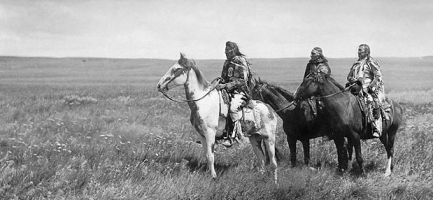
Blackfeet Plains Indians on horseback


Indigenous Peoples

The first peoples to live in a land are called indigenous peoples. This means they were the original settlers. The Native Americans are the indigenous peoples and cultures of the United States.

American Indians

Sometimes these peoples are referred to as Indians or American Indians. This is because when Columbus had first landed in America, he thought he had sailed all the way to to the country of India. He called the locals Indians and the name stuck for some time.

Where did they Live?

Native Americans lived throughout North and South America. In the United States there were Native Americans in Alaska, Hawaii, and the mainland of the United States. Different tribes and cultures lived in different areas. In the middle of the country lived the Plains Indians including tribes such as the Comanche and Arapaho. In the Southeast lived tribes such as the Cherokee and the Seminole.

Tribes

The Native Americans were grouped into tribes or nations usually based on the area they lived in and their culture such as their religion, customs, and language. Sometimes smaller tribes were part of a bigger tribe or nation. As best as historians can tell, these tribes were fairly peaceful prior to the arrival of Columbus and the Europeans.

There were hundreds of tribes throughout the United States when Columbus first arrived. Many of them are well known such as the Cherokee, Apache, and the Navajo. To learn more about them, you can get a closer look at some of these tribes in the links below.

How do we know about their history?

The Native Americans did not write down or record their history, so we have to find out about their history in other ways. Today archeologists are able to learn much from finding and digging up artifacts such as tools and weapons. Much of what we know comes from the recordings of the first Europeans to arrive. We can also learn from traditions and stories that have been passed down.

Native Americans Today

Today some descendents of the original American Indians live on reservations. These are areas of land set aside specifically for Native Americans to live on. Today this helps to protect their heritage and culture. However, only around 30% live on reservations. The rest live outside the reservations just like anyone else.

Recommended books and references:

  • If You Lived with the Iroquois by Ellen Levine. 1998.
  • Apache: American Indian Art and Culture by Heather Kissock and Jordan McGill. 2011.
  • The Cherokee by Petra Press. 2002.
  • Indians of the Great Plains: Traditions, History, Legends, and Life by Lisa Sita. 1997.
  • Native Homes by Bobby Kalman. 2001.
  • The Navajo Nation by Sandra M Pasqua. 2000.


  • For more Native American History: See also the Native Americans in the United States at Encyclopedia Junior.

    Back to History for Kids

    Kid's Poll

    Where would you like to go for Spring Break this year?
    The Beach
    Disney World
    Europe
    The Mountains
    Stay at home


    Vote on more Kids Polls!


    Joke of the Day

    Q: What did the judge say when the skunk walked in the court room?

    A: Odor in the court!


    Today In History

    Who was born on this day:
    1732 George Washington (1st US President)
    1820 Frederic Chopin (Classic Composer)

    What happened today in history:
    1876 Johns Hopkins University is founded
    1980 The "Miracle on Ice": US defeats Russia in Hockey


    Jokes for Kids  Kids Games  Kids Movies  Homework Help  Kids Sports  Geography for Kids 

    About Ducksters  Link to Ducksters  Teachers 


    Last updated:


    This site is a product of TSI,Copyright 2012, All Rights Reserved. By using this site you agree to the Terms of Use.


    To cite this article using MLA style citation: