John Adams was the 2nd President of the United States.
Served as President: 1797-1801 Vice President: Thomas Jefferson Party: Federalist Age at inauguration: 61
Born: October 30 1735 in Braintree (now Quincy), Massachusetts Died: July 4, 1826 in Braintree (now Quincy), Massachusetts
Married:Abigail Smith Adams Children: 5 (Abigail, John Quincy, Charles, Thomas, and a daughter who died young) Nickname: Father of American Independence
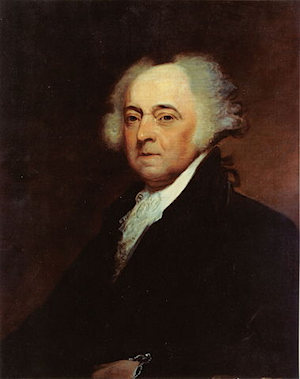
John Adams by Asher Brown Durand
Biography:
What is John Adams most known for?
John Adams was one of the founding fathers of the United States. He fought for American Independence as a Massachusetts delegate to the Continental Congress. He was a member of the team that worked on the Declaration of Independence and one of only two people who signed the Declaration to later become president (the other was Thomas Jefferson).
Growing Up
John grew up in the English colony of Massachusetts Bay. His father was an influential farmer and craftsman who became Speaker of the Massachusetts Bay legislature. John was an intelligent boy and his father put an emphasis on education. He went to Harvard for college where his father expected him to study to become a minister. John had different ideas, however, and decided to study law. He graduated from Harvard in 1755 and began practicing law in Boston soon afterward.
Before He Became President
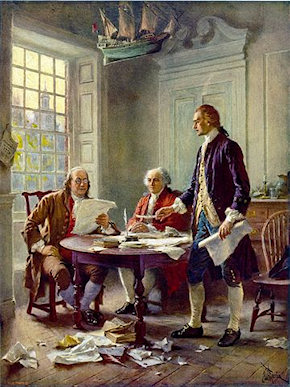
As Adams practiced law in Boston, he began to have strong feelings about the British rule. He felt that the colonies were not being treated fairly and should become independent from Britain. He became a member of the Massachusetts legislature and then served as their delegate at the Second Continental Congress. While serving on the congress he was a strong advocate of independence for America. He even worked on the Declaration of Independence with Thomas Jefferson.
Writing the Declaration of Independence, 1776 by Jean Leon Gerome Ferris
Thomas Jefferson (right), Benjamin Franklin (left), and John Adams (center)
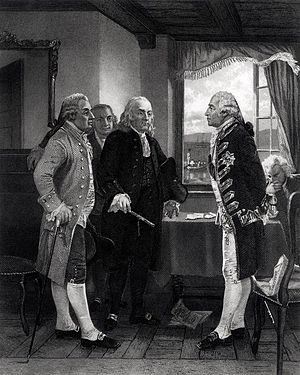
During the American Revolution, Adams went to Europe to gain funding for the war and secure alliances with other countries for the new American government. He also worked on the Treaty of Paris, along with Benjamin Franklin and John Jay, which finally put an end to the Revolutionary War.
John Adams' Presidency
Adams first served as Vice President under George Washington. He found this job boring and insignificant. However, when Washington stepped down, Adams ran for president and barely won over Thomas Jefferson in 1797.
During his presidency, Adams' main accomplishment was keeping the United States out of war with France. France and Great Britain were at war and both wanted help from the US. The American public was divided. Some wanted to support France because France helped the US during the American Revolution. Others wanted to help Great Britain. Although it hurt his popularity at the time, Adams opted for peace and kept the country out of the war.
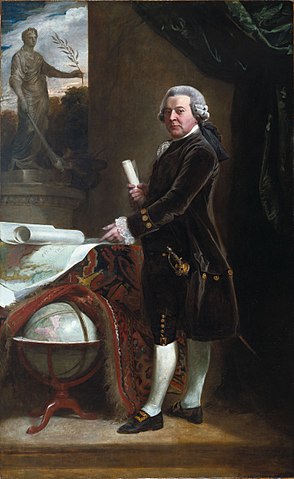
John Adams by John Singleton Copley
How did he die?
Adams lived to the ripe old age of 90 when he fell ill and died on July 4, 1826. In one of the more amazing coincidences of history, Adams died on the same day as Thomas Jefferson. This day was also the 50th anniversary of the approval of the Declaration of Independence!
Fun Facts about John Adams
Adams was married to his wife Abigail for 53 years. Abigail and John wrote many letters to each other over the years, sometimes daily.
He was overweight and some people called him by the nickname "His Rotundity".
Thomas Jefferson and Adams were rivals for the presidency. When Adams won, Jefferson became vice president because, at the time, the person with the second most votes for president became vice president.
His final words were "Thomas Jefferson still survives". However, he didn't know that Jefferson had died a few hours earlier.
Adams was the first president to live in the White House.
His son, John Quincy Adams, became the 6th President of the United States.
John Adams and Benjamin Franklin at Peace Conference by Alonzo Chappel