|
Uganda
|
|
Capital: Kampala
Population: 44,269,594
Brief History of Uganda:
Uganda is a landlocked country in the southeast of Africa. It is often called the ?Pearl of Africa?.
Uganda was the home to tribal hunter gatherers for thousands of years when the Bantu peoples migrated into the land and established several kingdoms. These kingdoms included the Empire of Kitara, the kingdom of Buganda, and the kingdom of Ankole.
Arab traders came to Uganda in the 1830s, followed by British explorers in the 1860s. In 1888 Uganda came under the control of the British Empire and remained a colony of Britain until 1962 when the country became an independent nation. The first Chief Minister of Uganda was Benedicto Kiwanuka.
In 1971 Idi Amin took control of the country and made himself dictator. Around 300,000 people were killed by the government during this time. The terror continued with the rule of Milton Obote from 1980 to 1985. Starting in 1986 some stability was brought to the country.
The Geography of Uganda
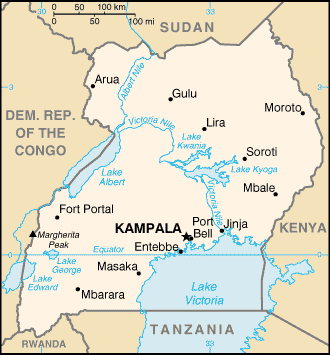
Total Size: 236,040 square km
Size Comparison: slightly smaller than Oregon
Geographical Coordinates: 1 00 N, 32 00 E
World Region or Continent: Africa
General Terrain: mostly plateau with rim of mountains
Geographical Low Point: Lake Albert 621 m
Geographical High Point: Margherita Peak on Mount Stanley 5,110 m
Climate: tropical; generally rainy with two dry seasons (December to February, June to August); semiarid in northeast
Major cities: KAMPALA (capital) 1.535 million (2009)
The People of Uganda
Type of Government: republic
Languages Spoken: English (official national language, taught in grade schools, used in courts of law and by most newspapers and some radio broadcasts), Ganda or Luganda (most widely used of the Niger-Congo languages, preferred for native language publications in the capital and may be taught in school), other Niger-Congo languages, Nilo-Saharan languages, Swahili, Arabic
Independence: 9 October 1962 (from UK)
National Holiday: Independence Day, 9 October (1962)
Nationality: Ugandan(s)
Religions: Roman Catholic 33%, Protestant 33%, Muslim 16%, indigenous beliefs 18%
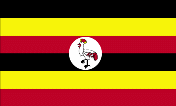
National Symbol: grey crowned crane
National Anthem or Song: Oh Uganda, Land of Beauty!
Economy of Uganda
Major Industries: sugar, brewing, tobacco, cotton textiles; cement, steel production
Agricultural Products: coffee, tea, cotton, tobacco, cassava (tapioca), potatoes, corn, millet, pulses, cut flowers; beef, goat meat, milk, poultry
Natural Resources: copper, cobalt, hydropower, limestone, salt, arable land
Major Exports: coffee, fish and fish products, tea, cotton, flowers, horticultural products; gold
Major Imports: capital equipment, vehicles, petroleum, medical supplies; cereals
Currency: Ugandan shilling (UGX)
National GDP: $47,780,000,000
** Source for population (2012 est.) and GDP (2011 est.) is CIA World Factbook.
Back to Geography Home Page