|
Guatemala
|
|
Capital: Guatemala
Population: 17,581,472
Brief History of Guatemala:
Guatemala was home to the ancient civilization of the Maya. This was a powerful and advanced civilization that built many pyramids that we can still visit today. The Maya civilization was at its height from around 250 AD to 900 AD in what was called the Classic Period. When the Europeans arrived in the 14th century, the Mayan civilization was already declining. Spanish conquistador Pedro de Alvarado defeated the Maya in 1524 and the area became a Spanish colony. Due to natural disasters, Guatemala has had three different capital cities. The first was Ciudad Vieja which was destroyed by an earthquake and floods. The second was Antigua, which was also destroyed by earthquakes. The third capital was founded in 1776, Guatemala City.
In 1821, Guatemala gained independence from Spain and became part of the Mexican Empire. Later it became a member of the United Provinces of Central America for a short time.
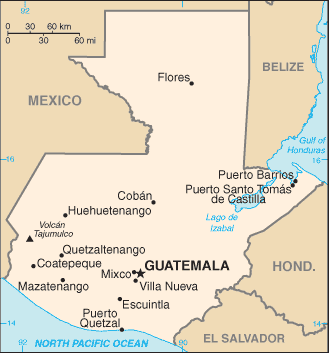
The Geography of Guatemala
Total Size: 108,890 square km
Size Comparison: slightly smaller than Tennessee
Geographical Coordinates: 15 30 N, 90 15 W
World Region or Continent: Central America
General Terrain: mostly mountains with narrow coastal plains and rolling limestone plateau
Geographical Low Point: Pacific Ocean 0 m
Geographical High Point: Volcan Tajumulco 4,211 m
Climate: tropical; hot, humid in lowlands; cooler in highlands
Major cities: GUATEMALA CITY (capital) 1.075 million (2009), Mixco, Villa Nueva
The People of Guatemala
Type of Government: constitutional democratic republic
Languages Spoken: Spanish 60%, Amerindian languages 40% (23 officially recognized Amerindian languages, including Quiche, Cakchiquel, Kekchi, Mam, Garifuna, and Xinca)
Independence: 15 September 1821 (from Spain)
National Holiday: Independence Day, 15 September (1821)
Nationality: Guatemalan(s)
Religions: Roman Catholic, Protestant, indigenous Mayan beliefs
National Symbol: quetzal (bird)
National Anthem or Song: Himno Nacional de Guatemala (National Anthem of Guatemala)
Economy of Guatemala
Major Industries: sugar, textiles and clothing, furniture, chemicals, petroleum, metals, rubber, tourism
Agricultural Products: sugarcane, corn, bananas, coffee, beans, cardamom; cattle, sheep, pigs, chickens
Natural Resources: petroleum, nickel, rare woods, fish, chicle, hydropower
Major Exports: coffee, sugar, petroleum, apparel, bananas, fruits and vegetables, cardamom
Major Imports: fuels, machinery and transport equipment, construction materials, grain, fertilizers, electricity
Currency: quetzal (GTQ), US dollar (USD), others allowed
National GDP: $74,840,000,000
** Source for population (2012 est.) and GDP (2011 est.) is CIA World Factbook.
Back to Geography Home Page