|
Ethiopia
|
|
Capital: Addis Ababa
Population: 112,078,730
Brief History of Ethiopia:
The Kingdom of Ethiopia is one of the oldest kingdoms in the world and certainly the oldest independent country in Africa. Ancient Ethiopia is mentioned in Greek history as well as Hebrew history. Ethiopia managed to avoid colonization from Europe unlike most other African areas and countries. During World War II, Italy occupied the country for a few years, but was removed when they lost the war.
In modern times Ethiopia has been ravaged by famine and military coups. In 1974 Emperor Haile Selassie was forcibly removed by the military and a socialist state was put into place. For many years Ethiopia was a place of unrest and civil strife. Refugees starved as different military regimes fought for power. Some peace was restored in 1995 with the establishment of a constitution and multiparty elections. Ethiopia currently has a border dispute with Eritria.
The Geography of Ethiopia
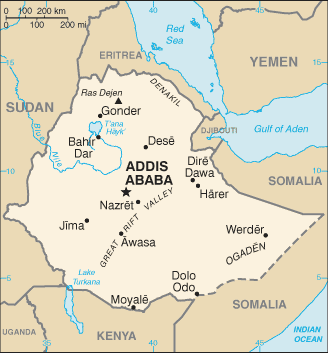
Total Size: 1,127,127 square km
Size Comparison: slightly less than twice the size of Texas
Geographical Coordinates: 8 00 N, 38 00 E
World Region or Continent: Africa
General Terrain: high plateau with central mountain range divided by Great Rift Valley
Geographical Low Point: Denakil Depression -125 m
Geographical High Point: Ras Dejen 4,620 m
Climate: tropical monsoon with wide topographic-induced variation
Major cities: ADDIS ABABA (capital) 2.863 million (2009), Gonder
The People of Ethiopia
Type of Government: federal republic
Languages Spoken: Amharic, Tigrinya, Oromigna, Guaragigna, Somali, Arabic, other local languages, English (major foreign language taught in schools)
Independence: oldest independent country in Africa and one of the oldest in the world - at least 2,000 years
National Holiday: National Day (defeat of MENGISTU regime), 28 May (1991)
Nationality: Ethiopian(s)
Religions: Muslim 45%-50%, Ethiopian Orthodox 35%-40%, animist 12%, other 3%-8%
National Symbol: Abyssinian lion
National Anthem or Song: Whedefit Gesgeshi Woud Enat Ethiopia (March Forward, Dear Mother Ethiopia)
Economy of Ethiopia
Major Industries: food processing, beverages, textiles, leather, chemicals, metals processing, cement
Agricultural Products: cereals, pulses, coffee, oilseed, cotton, sugarcane, potatoes, qat, cut flowers; hides, cattle, sheep, goats; fish
Natural Resources: small reserves of gold, platinum, copper, potash, natural gas, hydropower
Major Exports: coffee, qat, gold, leather products, live animals, oilseeds
Major Imports: food and live animals, petroleum and petroleum products, chemicals, machinery, motor vehicles, cereals, textiles
Currency: birr (ETB)
National GDP: $94,850,000,000
** Source for population (2012 est.) and GDP (2011 est.) is CIA World Factbook.
Back to Geography Home Page