|
Bolivia
|
|
Capital: La Paz (adminstrative capital)
Population: 11,513,100
Brief History of Bolivia:
The earliest known ancient civilization in Bolivia was the Tiwanakan culture which was around 2000 BC and was located south of Lake Titicaca. They built a great city called Tiwanaku.
Thousands of years later, in the 15 century, the Incan Empire entered into Boliva. They were the dominant culture until the Spanish arrived in 1525. The Bolivians lived under Spanish rule for almost 300 years, however, in 1809 they declared their independence. They fought the Spanish for another 16 years until they became the Republic of Bolivia on August 6, 1825. The country was named after the great liberator and general Simon Bolivar.
Bolivia, however, was not a strong or wealthy country. Although there were periods where silver or tin did well as exports, in general, their government was unstable and weak for years to come. In the late 1800's they fought the War of the Pacific against Chile. They lost the war and also their coastland. Now Bolivia was landlocked with no ocean access.
The 1900s have been filled with revolution and turmoil for the country of Bolivia. There have been many changes in leadership, the type of governments, attempts at democracy, and military coups over the last 50 years.
The Geography of Bolivia
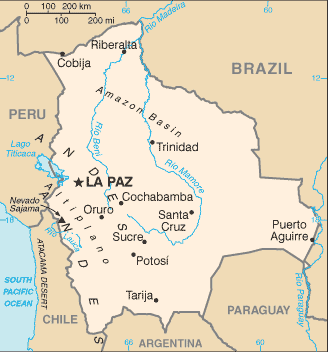
Total Size: 1,098,580 square km
Size Comparison: slightly less than three times the size of Montana
Geographical Coordinates: 17 00 S, 65 00 W
World Region or Continent: South America
General Terrain: rugged Andes Mountains with a highland plateau (Altiplano), hills, lowland plains of the Amazon Basin
Geographical Low Point: Rio Paraguay 90 m
Geographical High Point: Nevado Sajama 6,542 m
Climate: varies with altitude; humid and tropical to cold and semiarid
Major cities: LA PAZ (capital) 1.642 million; Santa Cruz 1.584 million; Sucre 281,000 (2009)
The People of Bolivia
Type of Government: republic
Languages Spoken: Spanish (official), Quechua (official), Aymara (official)
Independence: 6 August 1825 (from Spain)
National Holiday: Independence Day, 6 August (1825)
Nationality: Bolivian(s)
Religions: Roman Catholic 95%, Protestant (Evangelical Methodist) 5%
National Symbol: llama; Andean condor
National Anthem or Song: Cancion Patriotica (Patriotic Song)
Economy of Bolivia
Major Industries: mining, smelting, petroleum, food and beverages, tobacco, handicrafts, clothing
Agricultural Products: soybeans, coffee, coca, cotton, corn, sugarcane, rice, potatoes; timber
Natural Resources: tin, natural gas, petroleum, zinc, tungsten, antimony, silver, iron, lead, gold, timber, hydropower
Major Exports: natural gas, soybeans and soy products, crude petroleum, zinc ore, tin
Major Imports: petroleum products, plastics, paper, aircraft and aircraft parts, prepared foods, automobiles, insecticides, soybeans
Currency: boliviano (BOB)
National GDP: $50,940,000,000
** Source for population (2012 est.) and GDP (2011 est.) is CIA World Factbook.
Back to Geography Home Page