|
Benin
|
|
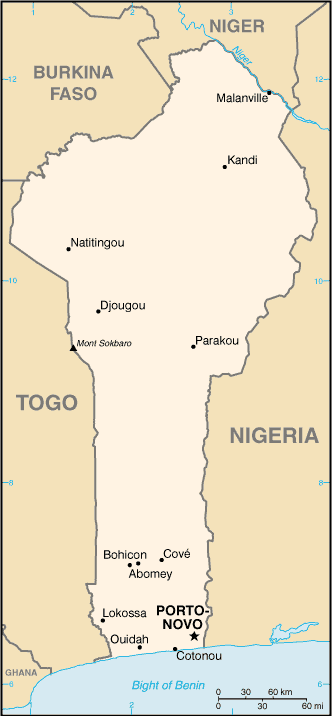
Capital: Porto-Novo (official capital)
Population: 11,801,151
Brief History of Benin:
Prior to the 15th century, Benin was mostly settled by smaller tribes. However, in the 15th century the African kingdom of Danhomey rose up. When the Europeans arrived in the 18th Century Danhomey was still growing. They traded with the Frendh, the Dutch, and the Portuguese. Danhomey was a war based kingdom where their captives were either put to death or traded to the Europeans as slaves in exchange for weapons.
Later, in the early 1900's Benin became a French colony. In 1958 it became self-governing within the French community and was called the Republique du Dahomey. A few years later, in 1960, it became a fully independent country called the Republic of Benin.
The Geography of Benin
Total Size: 112,620 square km
Size Comparison: slightly smaller than Pennsylvania
Geographical Coordinates: 9 30 N, 2 15 E
World Region or Continent: Africa
General Terrain: mostly flat to undulating plain; some hills and low mountains
Geographical Low Point: Atlantic Ocean 0 m
Geographical High Point: Mont Sokbaro 658 m
Climate: tropical; hot, humid in south; semiarid in north
Major cities: COTONOU (seat of government) 815,000; PORTO-NOVO (capital) 276,000 (2009)
The People of Benin
Type of Government: republic
Languages Spoken: French (official), Fon and Yoruba (most common vernaculars in south), tribal languages (at least six major ones in north)
Independence: 1 August 1960 (from France)
National Holiday: National Day, 1 August (1960)
Nationality: Beninese (singular and plural)
Religions: indigenous beliefs 50%, Christian 30%, Muslim 20%
National Symbol: leopard
National Anthem or Song: L'Aube Nouvelle (The Dawn of a New Day)
Economy of Benin
Major Industries: textiles, food processing, construction materials, cement
Agricultural Products: cotton, corn, cassava (tapioca), yams, beans, palm oil, peanuts; livestock
Natural Resources: small offshore oil deposits, limestone, marble, timber
Major Exports: cotton, crude oil, palm products, cocoa
Major Imports: foodstuffs, capital goods, petroleum products
Currency: Communaute Financiere Africaine franc (XOF); note - responsible authority is the Central Bank of the
National GDP: $14,750,000,000
** Source for population (2012 est.) and GDP (2011 est.) is CIA World Factbook.
Back to Geography Home Page