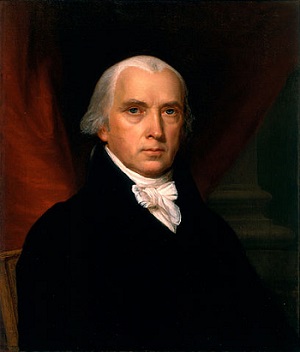
James grew up on a tobacco farm in the Colony of Virginia. He had eleven brothers and sisters, although several of them died at a young age. James was a sickly child as well and liked to stay inside and read. Fortunately, he was very intelligent and performed well in school.
He attended the College of New Jersey (today it is Princeton University) and graduated in two years. He learned a number of languages and studied law as well. After college Madison went into politics and within a few years became a member of the Virginia legislature.
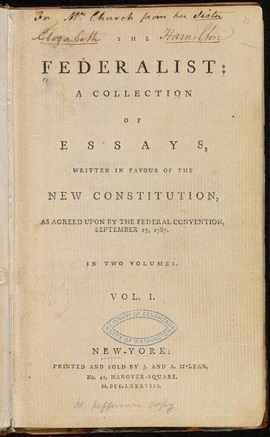
The Federalist Papers were written by James Madison, John Jay, and Alexander Hamilton Source: Library of Congress
Before He Became President
In 1780, Madison became a member of the Continental Congress. Here he became an influential member and worked hard to keep the states united against the British.
Working on the Constitution
After the Revolutionary War was over, Madison took a lead role at the Philadelphia Convention. Although the original intent of the convention was to update the Articles of Confederation, Madison led the charge to develop a full constitution and create the US federal government.
The idea of a federal government was new to some states and many people were unsure if they wanted to join the United States. James Madison wrote many essays called the Federalist Papers to help convince states to ratify the Constitution and join the United States. These papers described the benefits of a strong and united federal government.
Madison served four terms in the United States Congress. During that time he helped the Bill of Rights get passed into law, protecting the basic rights of citizens. Later, he became the Secretary of State for his friend Thomas Jefferson.
Dolley Madison
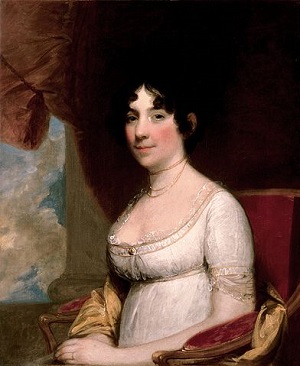
James married Dolley Payne Todd in 1794. Dolley was a popular first lady. She was a lively hostess and put on great parties at the White House. She was also brave. Right before the British burned down the White House during the War of 1812, she managed to save a number of important documents and a famous painting of George Washington while escaping.
James Madison's Presidency
The main event during Madison's presidency was the War of 1812. This started because France and Britain were at war. Madison did not want to enter the war, but Britain was seizing US trade ships, and he finally felt he had no choice. In 1812 he asked congress to declare war on Britain.
Dolley Madison by Gilbert Stuart
Unfortunately, the US was in no position to fight the British and lost many battles, including one where the British marched on Washington DC and burned down the White House. However, the final battle of the war, the Battle of Orleans, was a victory led by General Andrew Jackson. This helped the country to feel they had done well and raised Madison's popularity.
How did he die?
Madison's health slowly deteriorated until he finally died at the age of 85. He was the last person alive who had signed the US Constitution.
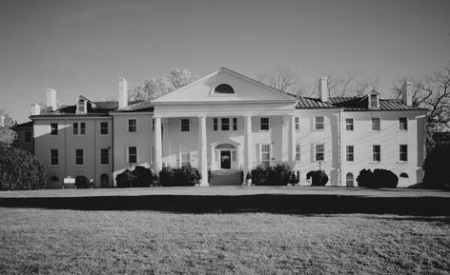
James Madison's home, called Montpelier, in Virginia. Photo by Robert C. Lautman
Fun Facts about James Madison
James was 5 feet 4 inches tall and weighed 100 pounds.
Madison and George Washington are the only presidents who signed the Constitution.
Both of his vice presidents, George Clinton and Elbridge Gerry, died in office.