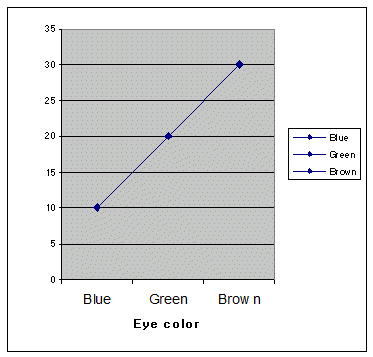
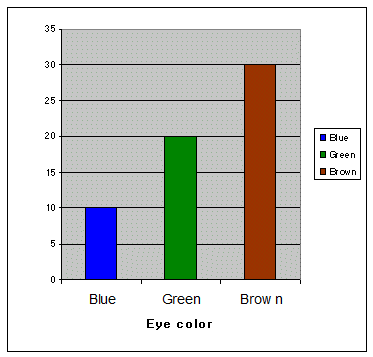
Basic Graphing Percentages Multiplication Addition Picture Graphs Picture graphs are a way to show data and make it easier to read. If we just look at a bunch of numbers on a list or spreadsheet a lot of times it just looks like a bunch of numbers. However, if we can graph the numbers in the right way, the data may take on new meaning for us. Using picture graphs can be fun. There are three types we are going to learn how to make in this lesson: Line graphs, Bar graphs, and Pie graphs. Note: These are sometimes called charts instead of graphs. Line Graph In a line graph we graph each point of data and then draw lines between each point. Here is an example: There are 60 kids in the class room; 10 have blue eyes, 20 have green eyes, 30 have brown eyes. Make a line graph of the color of eyes vs. the number of kids. So first we must construct our graph. We put kids on the vertical axis along the left side. We'll make line marks at every 5 kids on the vertical. Then we'll put color of eyes on the horizontal axis (the flat one) and put blue, green, and brown. Directly above blue we put a dot on the 10, because 10 kids have blue eyes. We also put dots on the 20 above green and 30 above brown. Now we draw a line between the dots and we have our line graph.
Line graphs can be good to show how a data set is trending. If the line is dropping or going up then we know which direction the data is moving. This could be over time, speed, or any other type of variable. Bar Graph In a bar graph we no longer just put a dot and then connect the dots. For a bar graph we draw a bar from 0 to the data point. We do this for each data point. See below for how we would graph our example of kid's eye color.
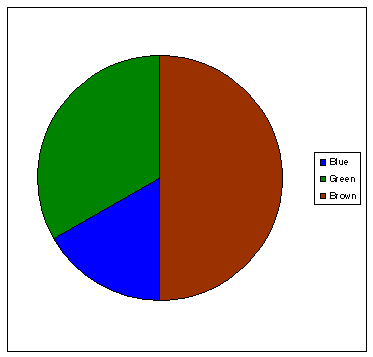
Pie graph A pie graph could also be called a circle graph or chart. In a Pie graph we start out with a circle. Then we divide up that circle into pie pieces for what percentage each type of data has. In our example, we'll first need to change the data into percentages: 30 out of 60 kids have brown eyes. That's easy. 30/60 = ½ = 50%. 20 out of 60 kids have green eyes. 20/60 = 1/3 = 33% 10 out of 60 kids have blue eyes. 10/60 = 1/6 = 17% Now we slice up the pie and graph it as shown below.
Advanced Kids Math Subjects Statistics Mean, Median, Mode, and Range Picture Graphs Algebra Order of Operations Exponents Ratios Ratios, Fractions, and Percentages Geometry Polygons Quadrilaterals Triangles Pythagorean Theorem Circle Perimeter Surface Area Misc Prime Numbers Roman Numerals Back to Kids Math Back to Kids Study |
|