|
Niue
|

|
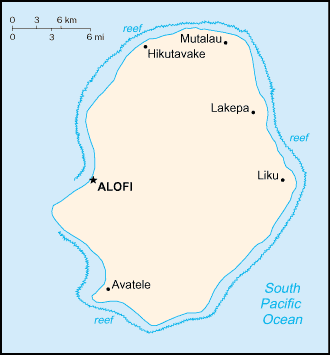
Capital: Alofi
Population: 1,615
Brief History of Niue:
Niue's remoteness, as well as cultural and linguistic differences between its Polynesian inhabitants and those of the rest of the Cook Islands, have caused it to be separately administered. The population of the island continues to drop (from a peak of 5,200 in 1966 to about 2,166 in 2006), with substantial emigration to New Zealand, 2,400 km to the southwest.
The Geography of Niue
Total Size: 260 square km
Size Comparison: 1.5 times the size of Washington, DC
Geographical Coordinates: 19 02 S, 169 52 W
World Region or Continent: Oceania
General Terrain: steep limestone cliffs along coast, central plateau
Geographical Low Point: Pacific Ocean 0 m
Geographical High Point: unnamed location near Mutalau settlement 68 m
Climate: tropical; modified by southeast trade winds
Major cities:
The People of Niue
Type of Government: self-governing parliamentary democracy
Languages Spoken: Niuean, a Polynesian language closely related to Tongan and Samoan; English
Independence: on 19 October 1974, Niue became a self-governing parliamentary government in free association with New Zealand
National Holiday: Waitangi Day (Treaty of Waitangi established British sovereignty over New Zealand), 6 February (1840)
Nationality: Niuean(s)
Religions: Niue is a small island country in the South Pacific Ocean. It's nickname is ?the Rock?. Only around 1,400 people live there.
The first European to discover Niue was British Captain James Cook in 1774. He called the island Savage Island because he thought they were painted with blood. However, it was just the hulahua, which is a red banana native to the island.
National Symbol:
National Anthem or Song: Ko e Iki he Lagi (The Lord in Heaven)
Economy of Niue
Major Industries: tourism, handicrafts, food processing
Agricultural Products: coconuts, passion fruit, honey, limes, taro, yams, cassava (tapioca), sweet potatoes; pigs, poultry, beef cattle
Natural Resources: fish, arable land
Major Exports: canned coconut cream, copra, honey, vanilla, passion fruit products, pawpaws, root crops, limes, footballs, stamps, handicrafts
Major Imports: food, live animals, manufactured goods, machinery, fuels, lubricants, chemicals, drugs
Currency: New Zealand dollar (NZD)
National GDP: $10,010,000
** Source for population (2012 est.) and GDP (2011 est.) is CIA World Factbook.
Back to Geography Home Page