|
Fiji
|
|
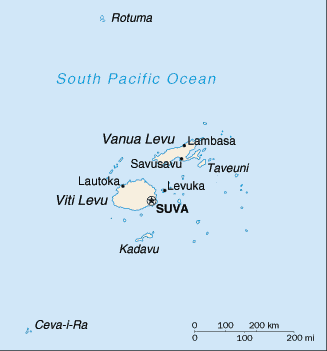
Capital: Suva (on Viti Levu)
Population: 889,953
Brief History of Fiji:
The country of Fiji is a set of Islands in the South Pacific. The original settlers of Fiji were Polynesian and Melanesian peoples who have lived on the islands for thousands of years.
In the first part of the 19th century, Europeans arrived on the islands. The tribal groups on the islands began to war and finally the local chiefs decided to give the islands to Britain in 1874 in an effort to restore peace.
Fiji was a British colony for around 100 years when in 1970 it became an independent country. Since becoming independent, Fiji has experienced times of democracy and military dictatorship. In 2006 Commodore Frank Bainimarama led a military coup and took over the country. He has ruled Fiji without free elections since.
The Geography of Fiji
Total Size: 18,270 square km
Size Comparison: slightly smaller than New Jersey
Geographical Coordinates: 18 00 S, 175 00 E
World Region or Continent: Oceania
General Terrain: mostly mountains of volcanic origin
Geographical Low Point: Pacific Ocean 0 m
Geographical High Point: Tomanivi 1,324 m
Climate: tropical marine; only slight seasonal temperature variation
Major cities: SUVA (capital) 174,000 (2009)
The People of Fiji
Type of Government: republic
Languages Spoken: English (official), Fijian (official), Hindustani
Independence: 10 October 1970 (from UK)
National Holiday: Independence Day, second Monday of October (1970)
Nationality: Fijian(s)
Religions: Christian 52% (Methodist 37%, Roman Catholic 9%), Hindu 38%, Muslim 8%, other 2%
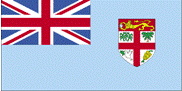
National Symbol:
National Anthem or Song: God Bless Fiji
Economy of Fiji
Major Industries: tourism, sugar, clothing, copra, gold, silver, lumber, small cottage industries
Agricultural Products: sugarcane, coconuts, cassava (tapioca), rice, sweet potatoes, bananas; cattle, pigs, horses, goats; fish
Natural Resources: timber, fish, gold, copper, offshore oil potential, hydropower
Major Exports: sugar, garments, gold, timber, fish, molasses, coconut oil
Major Imports: manufactured goods, machinery and transport equipment, petroleum products, food, chemicals
Currency: Fijian dollar (FJD)
National GDP: $4,153,000,000
** Source for population (2012 est.) and GDP (2011 est.) is CIA World Factbook.
Back to Geography Home Page