Brief History of Falkland Islands (Islas Malvinas):
The Falkland Islands were first discovered in 1592, but it wasn't until 1690 when Captain John Strong of the British ship Welfare was driven off course and reached the Falkland Islands on accident, landing at Bold Cove. The first settlement on the islands was established by the French over 100 years later in 1764. Two years later the colony was turned over to Spain.
For some time Britain and Spain disputed as to who owned the islands. Later, when Spain left South America, Argentina and Britain would dispute the rights to the islands. In April of 1982, Argentina invaded the island in hopes of capturing it from the British. The British under the leadership of Prime Minister Margaret Thatcher responded and drove the Argentine army from the land in what is called the Falkland Islands War. Today the islands are considered a self-governing British Overseas Territory.
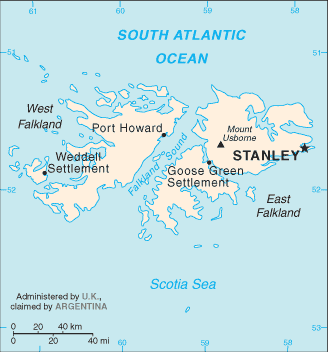
The Geography of Falkland Islands (Islas Malvinas)
Total Size: 12,173 square km
Size Comparison: slightly smaller than Connecticut
General Terrain: rocky, hilly, mountainous with some boggy, undulating plains
Geographical Low Point: Atlantic Ocean 0 m
Geographical High Point: Mount Usborne 705 m
Climate: cold marine; strong westerly winds, cloudy, humid; rain occurs on more than half of days in year; average annual rainfall is 24 inches in Stanley; occasional snow all year, except in January and February, but does not accumulate
Major cities: STANLEY (capital) 2,000 (2009)
The People of Falkland Islands (Islas Malvinas)
Type of Government: NA
Languages Spoken: English
Independence: none (overseas territory of the UK; also claimed by Argentina)
National Holiday: Liberation Day, 14 June (1982)
Nationality: Falkland Islander(s)
Religions: primarily Anglican, Roman Catholic, United Free Church, Evangelist Church, Jehovah's Witnesses, Lutheran, Seventh-Day Adventist
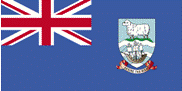
National Symbol: ram
National Anthem or Song: Song of the Falklands
Economy of Falkland Islands (Islas Malvinas)
Major Industries: fish and wool processing; tourism
Agricultural Products: fodder and vegetable crops; sheep, dairy products