James K. Polk
was the 11th President of the United States.
Served as President: 1845-1849 Vice President: George Dallas Party: Democrat Age at inauguration: 49
Born: November 2, 1795 in Mecklenburg County, North Carolina Died: June 15, 1849 in Nashville, Tennessee
Married: Sarah Childress Polk Children: none Nickname: Young Hickory
Biography:
What is James K. Polk most known for?
James K. Polk is mostly known for expanding the territory of the United States. He added Texas and Wisconsin as states and secured land to the west that would one day make up the entire 48 contiguous states of the United States.
Growing Up
James grew up in a big family. He was the oldest of 10 children. He first lived in North Carolina and then his family moved to Tennessee. He was a sickly child and even had to have his gallstones removed in a surgery without any type of pain killers or anesthesia.
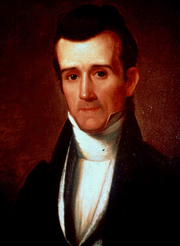
James K. Polk by Unknown
James graduated with honors from the University of North Carolina in 1818. He then went on to study law and became a lawyer in 1820. From there he started his own successful law practice.
Before He Became President
Polk soon decided to enter politics. He was a good speaker, a skill which he had learned from being part of the debate club in college. His political career began when he was elected to the Tennessee state legislature. Next, he became a member of the U.S. House of Representatives. Polk was a supporter of fellow Tennessean Andrew Jackson. Andrew Jackson's nickname was "Old Hickory" and Polk ended up with the nickname "Young Hickory" because he supported Jackson and was also from Tennessee.
Polk served in the House for 14 years. He was a respected member and was eventually elected to Speaker, or leader, of the House. In 1839 he became governor of Tennessee.
In 1844, Polk entered the presidential race hoping to be nominated for vice president. Most people expected that former president, Martin Van Buren, would get the Democratic Party nomination for president. However, Van Buren was not popular and Polk ended up being nominated by the Democrats for president. He defeated Whig leader Henry Clay in the general election and became president in 1845.
James K. Polk's Presidency
When Polk became president, his main goal was to expand the borders of the United States all the way to the Pacific Ocean. He also wanted to settle border disputes with Great Britain regarding the Oregon Territory.
Polk threatened Great Britain with war over the northern boundary to the west. He said that the U.S. wanted the territory all the way to the 54-40 line, just south of Alaska. A popular slogan of the day was "54-40 or fight". Britain later agreed to a border at the 49th parallel, which is today the border between the U.S. and Canada. Polk was happy about this settlement as he never really wanted to go war with Britain.
Mexican-American War
One of the first things Polk did when he became president was to grant Texas statehood. This made the Mexican government angry. Tensions began to mount at the border and it wasn't long before the Mexican-American War broke out. The Americans dominated the war and eventually took over much of the land that became the Southwest of the United States including New Mexico, Arizona, and California.
No Second Term
Polk decided not to run for a second term as president. He felt that he had accomplished his goal of expanding the territory of the U.S. to the Pacific Ocean and there was no need for another term.
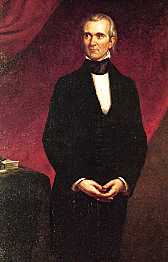
James Knox Polk by George Peter Alexander Healy
How did he die?
Polk had worked very hard at being president and was exhausted and sickly. Just three months after leaving office, he died of cholera.
Fun Facts About James K. Polk
The "K" in his middle name stood for Knox.
Although many people don't know much about President Polk, he is considered by many historians to be one of the more important U.S. presidents in history.
His roommate at the University of North Carolina, William Dunn Moseley, became the first governor of Florida.
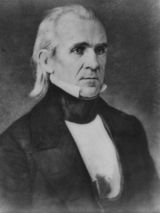
Polk was the first president to have his photograph taken while in office.
The tradition of the playing the song "Hail to the Chief" started while Polk was president.
Many Americans believed it was their right to expand westward. This was called Manifest Destiny.
Polk added 1.2 million square miles of land to the United States.